For most of us, we probably started doing calligraphy with the Speedball calligraphy C series nibs. I discovered calligraphy around 1977 when my family moved from Illinois to Indiana and I found my mothers art case. In it was oil paints, paint brushes, various calligraphy nibs, India Ink, and an old Speedball textbook on Gothic Script. This discovery closely coincided with my cousins visit that summer and they introduced us the wonderful world of Dungeons & Dragons. Now I was firmly entrenched in the world of Medieval Fantasy and calligraphy was an artistic outlet for me. I was also checking out all the medieval books I could find at the local library and I will tell you now: the younger generations have it so good now with the Internet and the ease at which you can find information.
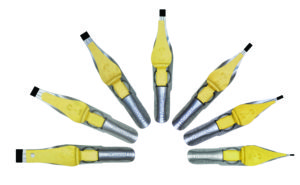
I have played with various nibs and have always come back to the Speedball C series nibs whenever I need to do specialized work (gold ink or a special ink). My pen of choice, for everyday calligraphy, is the Pilot Parallel Pen; I use the 1.5mm (which is the same size of C-4) for most of my work. I have several of the same sized pens (black, red, and blue) so I don’t have to worry about stopping and starting (I don’t like to do partial calligraphy…it is all or nothing, because I feel if I take more than an hours break, my flow is messed up and now the calligraphy is noticeably different from when I first started to when I restarted).

I, along with the standard Pilot Parallel Pens, also use the modified Parallel Pens available for John Neal Booksellers (JNB). They come in 1.0 and 2.0mm sizes…I typically use the 1.0mm pen size. Note once you modify a Parallel Pen, you void the warranty but the modified pens by JNB are warrantied by them.
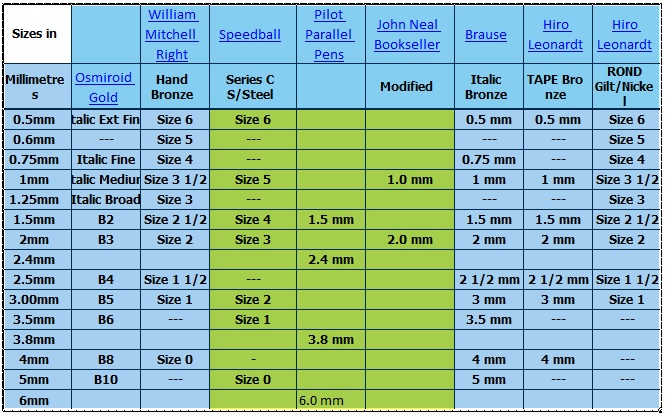
In preparation for this post I took my dial calipers and measured the tips of the modified JNB pens. Needless to say I was disappointed to find that, of the three that I own, two did not match the as advertised size. One measured at the tip, .85mm (also verified by measuring the line) and another measure at 1.5mm (also verified by measuring the line). So what to do?
My plan is to, in one of my next videos, is to show you how to modify these pens. In preparation, I have purchased files and high grit sand paper. I also have sharpening stones along with the dial caliper. Now I just have to purchase a few sacrificial pens and boldly go forth.
Until next time, thanks for reading.
 Sir Seved Ribbing, SCA